Posts

Showing posts with the label pranayama

Maha bandha-mudra

    Maha bandha- Mudra Maha bandha mudra should be perform for a longer time for good results. Sit in a state of Moola Bandha as pulling up the anus and raising the Apana Vayu that presides at coccyx region, lower the prana as applying Jalandhar Bandha, to which to unite it with Samana Vayu/prana as it situated at the umbilicus (navel) and responsible for digestion. The prana is the nerves that pulled up by Moola bandha and lowered with Jalandhar Bandha. Yogi unites both prana and Apana at Samana in the navel to keep moving the nectar upward to the brain. Samana Vayu (balancing air) is one of the five pranas Vayu. There are five pranas in the body: Parana, Udana, Vyana, Samana and Apana. Samana Vayu is an integrating energy force.   It draws from the stomach- area to the navel, of which having spiralling movements around the navel area or Manipuri chakras/solar plexus, in a clockwise direction to maintain the processing and assimilation of all we have taken in the ...
Mindfulness | What is mindfulness | How yoga can enhances mindfulness

Image
The secret to good health remains in living in the present moment earnestly, to be present by being observant in every activity minutely of your day, being aware of all the things you have to do is mindfulness. Whereas, when you are mingled in past and future events all the time and stuck in incidents of the past, and ignore present pursuit altogether then uneasy, tension, anxiety and worries arise that bring fear. The fear of uncertainty of the future and always pondering over past only bring disequilibrium mindfulness. Mindfulness is the trait of staying aware of paying attention to around and within you. Mindfulness is a tool that de-clutters your mind and helps one to choose the best action in the worst situation. Being present is where you are going; whatever you are doing, eating mindfully, walking mindfully, taking into consideration every morsel sans distracted, being aware of your surroundings are just a few examples of the mindfulness. By doing Yoga, asanas, m...

Adrenal glands |Best asanas, mudra, pranyamas and meditation can treat Adrenal fatigue

Image
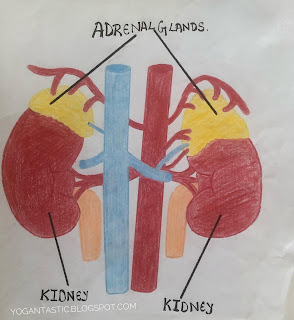
Excellent physical health promotes mental health sound; and depend upon our healthy eating habits, regular exercise- doing yoga and adequate sleep which can protect us from any diseases, virus and shield us against the stress. Suffering from depression and anxiety only which impair physical and emotional health. In this article, we study the adrenal glands and its working and how we can boost the adrenal glands, and how yoga and healthy diets boost our immune system and to be balanced hormones well. Adrenal glands   The adrenal glands are endocrine glands, small and triangular-shaped, either of a pair of complex endocrine glands situated on top of the kidneys has an outer cortex which produces steroid hormones.     The kidneys are either of two bean-shaped excretory organs which filter wastes (especially urea) from the blood and excrete them and water in urine. The adrenal glands comprised of two parts; the cortex and the medulla, and both perform dist...

Pranayam | How pranayama improves cardiorepiratory and enhance immunity

Image
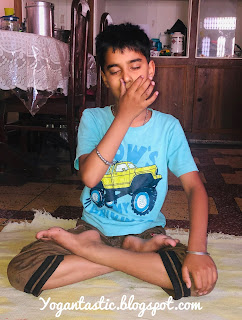
Pranayama is the life-force of yoga and is a technique of breath control of enhancing physical and mental health by to bring more oxygen to the blood and brain; further to control prana/vital energy. Pranayama is the science of breath control consists of a sequence of different methods assigned to meet the body in vibrant health, while the advanced technique of pranayama practices is to acquire the super consciousness during meditation. Central breathing of pranayama methods is clavicular (shallow), intercostal (middle) and abdominal breathing. Inhalation, retention and exhalation are three-part of advanced pranayama methods are followed by three bandhas. Pranayama keep helps to control the prana energy initially after that it gets easier to control the mind; since the state of mind is reflected in the way breathe. Pranayama directly helps to sustain the blood pure as lungs and other organs of the body refresh after being getting sufficient oxygen by  controlling the act o...

The immune System Episode # 3 |How to fight against virus |How Yoga and nutrition help us

Image
Adversity is a part of life, and being resilient is essential for defeating challenges. Facing difficult situations, and helping others can cultivate resilience.  The unprecedented times, now we are witnessing and becoming a part of the historic war waged against an unknown disease COVID- 19 pandemic sweeping the world, growing concern about the unprecedented extend of coronavirus outbreak in the world. The most of us in self-isolation or quarantine, the hard time we have ever seen before constrains all of us to stay home and the pressures put on our mental and physical health also, what will next.  How will this crisis change the world, no one knows; and this is a crisis like no other. How to thrive in isolation? We should focus on our health as a priority to acquire immunity. Immunity is the biggest ally in the fight against coronavirus pandemic. Studies show that weakened immunity is more susceptible to the worst outcome. Immunity is the condition in which...

Mula bandha, Jalandhar bandha and Uddiyan bandha | For Advanced pranayamas | More benifits

Image
The three bandhas are Mula bandha, uddiyan bandha and Jalandhar bandha; their purpose is to attain stability and adapted to conserve and make use of the vast reserves of prana energy which generated by the advanced breathing pranayamas and enable to regulate pranic energy flow for advanced yoga technique. Mula bandha and Jalandhar bandh are to perform concurrently during the retention to unite Prana and Apana Vayu, around abdominal or navel area. Applying the uddiyan bandh is only aimed to push up both pranas Vayu (Prana and Apana) into the Sushumna Nadi. Mula bandha : Sit in Padam asana or Siddha asana and breathe easily and when you want to do advanced pranayamas. Mula bandha practice during advanced pranayama exercises as pulling up the Apana Vayu by contracting anal sphincter muscles and then abdominal muscles.  Uddiyan bandha : After exhaling, pull the stomach up and then back towards the spine and keep sitting in the Siddha asana with both bandhas ( Mula ba...

How to do Padam Asana | How Padam asana is benificial to do in winter

Image
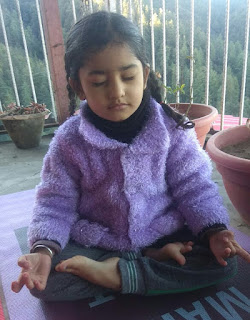
Padam asana, siddha asana, Swastika asana and sukh asana; these are the four asanas which are prescribed for the purposes of meditation and spiritual growth. Aspirant can sit in any one of four asanas at a stretch for more than one hour with steady mind and acquire consciousness as well as infinite peace.   Today, we learn about Padam asana. Padam asana is also known as the Lotus position, which is one of the classic postures aimed for meditation and pranayama that attributes one’s spiritual evolution. Padam asana makes the entire body attain a resting state and keeps the prana energy flow more actively in the body. The mind gets rejuvenated as the metabolism slows down and the longer you hold this asana the quicker the major Nadis such as Ida, Pingla and Sushumna become balanced naturally with continual practise. Padam asana makes ankles, knees, hips, spine and neck more flexible along with the nerves of the entire body. For beginners, Padam asana can be difficult ...